Spelling & pronunciation
Spell it "khaana," with a double A
English spelling is khaana, with two a's. The two a's aren't there for looks. Each one stands for a separate vowel sound, a sound held long.
खाना
khaana
Break it down: kha + a + n + a
Read "khaana" as four sound-pieces rather than six separate letters:
Each of those two "a"s is a separate vowel sound, held long (e.g., "u" in "but" represents a short "a" sound). Spell the word with a single a, and you drop one of those sounds which will point to the wrong pronunciation. Writing khaana keeps proper sound.
Devanagari
In Hindi's native Devanagari script, the word is written खाना. Urdu, which uses the Perso-Arabic script instead, writes the same word as کھانا. Same word, same pronunciation, different writing system, because Hindi and Urdu share most of their everyday vocabulary while writing it differently.
Formal transliteration: khānā
Linguists and dictionaries typically transliterate खाना as khānā, using a macron (the line over the a) to mark a long vowel. This is part of IAST (International Alphabet of Sanskrit Transliteration) and similar systems used in academic writing on Hindi and Urdu.
Common spelling: khaana
Outside of academic writing, most people don't have easy access to a macron, so the long ā gets written by simply doubling the letter: khaana. This is a widely understood convention in informal Romanized Hindi (sometimes called "Hinglish"): a doubled vowel signals "hold this sound longer" the same way the macron does.
| Form | Example | Where you'll see it |
|---|
| Devanagari | खाना | Hindi text, signage, print |
| Perso-Arabic (Urdu) | کھانا | Urdu text, signage, print |
| Scholarly transliteration | khānā | Academic writing, dictionaries, linguistics |
| Common Romanization | khaana | Everyday writing, branding, social media |
| Simplified spelling | khana | Shortcut writing, when the long vowel is dropped. The pronunciation becomes incorrect/approximate |
Hindi distinguishes between a short a (अ, as in the "u" in "but") and a long ā (आ, held roughly twice as long). Both syllables in खाना carry that long ā, which is exactly what the four-piece breakdown above shows.
Meaning
Does khaana mean "food," or "to eat"?
Both, depending on how it's used. Khaana is a noun meaning "food" or "a meal," and it's also the infinitive form of the verb "to eat."
As a noun: food, a meal
Used as a noun, खाना (khaana) simply means "food" or "a meal," in the general sense, not any specific dish.
Noun
खाना तैयार है।
Khaana taiyār hai.
The food is ready.
Noun
मुझे घर का खाना पसंद है।
Mujhe ghar kā khaana pasand hai.
I like home-cooked food.
As a verb: to eat
खाना (khaana) is also the infinitive form of the Hindi verb "to eat." Hindi infinitives regularly end in -nā (करना/karnā "to do," जाना/jānā "to go," खाना/khaana "to eat"), so this is not a coincidence of two look-alike words. It is one word, behaving the way Hindi infinitives behave.
Verb
मैं खाना खा रहा हूँ।
Maiṅ khaana khā rahā hūṅ.
I am eating (food).
Verb
क्या तुमने खाना खाया?
Kyā tumne khaana khāyā?
Did you eat?
Why one word covers both: the sentence "मैं खाना खा रहा हूँ" (Maiṅ khaana khā rahā hūṅ) literally uses खाना twice, once as the noun object ("food") and once inside the conjugated verb ("am eating"). That is not repetition for effect. It is simply how the grammar works, and it shows the noun and verb senses sitting side by side in ordinary speech.
Context does the work
In practice, Hindi and Urdu speakers rarely find this ambiguous. "खाना बनाना" (khaana banānā) means "to cook" (literally, "to make food"). "खाना खाना" (khaana khaana) means "to eat" (literally, "to eat food," using both senses back to back). Sentence position and the surrounding grammar make the intended meaning clear, the same way "watch" can be a noun or a verb in English without causing confusion.
History & etymology
Where does khaana come from?
Its roots trace back through Hindi and Urdu to a common Indo-Aryan verb for eating, with a false-friend mix-up along the way worth knowing about.
A shared Indo-Aryan root
Hindi and Urdu both descend from Sanskrit and its later spoken forms (Prakrit, then Apabhramsha), and खाना/کھانا (khaana) is generally traced to the Sanskrit verbal root khād- ("to chew, to eat"), seen in the Sanskrit verb खादति (khādati, "eats"). Over centuries of sound change as spoken Sanskrit evolved into the Prakrits and eventually into Hindi-Urdu, that root produced खाना (khaana), the modern infinitive "to eat," which (as covered in the meaning section) also became the everyday noun for "food."
The Persian false friend: -khana
Here is where it gets confusing, and where a lot of casual internet explanations go wrong. There's a completely different word, Persian خانه (khāna, "house" or "room"), that also gets Romanized as "khana." It shows up as a suffix in many Hindi/Urdu compound words borrowed from Persian: kārkhānā ("workhouse," i.e. factory), dawākhānā ("medicine-house," i.e. pharmacy or clinic), ḍākkhānā ("mail-house," i.e. post office).
This Persian khāna ("house") and the Hindi-Urdu khaana ("food"/"to eat") covered on this site are unrelated words from different language families that happen to sound and Romanize almost identically. Sanskrit and Persian belong to different branches of the broader Indo-European language family, and this pair is a coincidence of sound, not a shared origin. In careful transliteration, the vowel length and stress often differ slightly between the two, but in everyday Roman spelling, the overlap is a genuine, common source of confusion.
Across languages
Does every South Asian language say "khaana"?
Not necessarily, and that's the interesting part. South Asia has dozens of languages from at least two entirely unrelated language families. Some share khaana's root, some share only its verb, and some are completely unrelated.
Two language families, one region
Most North and West Indian languages, along with Urdu, Nepali, and Bengali, belong to the Indo-Aryan branch of the Indo-European language family, the same broad family English belongs to, however distantly. Most South Indian languages, Tamil, Telugu, Kannada, and Malayalam, belong to a completely separate family, Dravidian, with no shared ancestry with Sanskrit or Hindi at all. That split is the main reason "food" vocabulary looks so different from one end of India to the other.
| Language | Family | Common word(s) for food / meal | Related to khaana's root? |
|---|
| Hindi | Indo-Aryan | खाना (khaana) | Yes, direct cognate |
| Urdu | Indo-Aryan | کھانا (khaana) | Yes, the same word |
| Punjabi | Indo-Aryan | ਖਾਣਾ (khāṇā) | Yes, direct cognate |
| Nepali | Indo-Aryan | खाना (khaana) | Yes, direct cognate |
| Marathi | Indo-Aryan | जेवण (jevan, "meal"); खाणे (khāṇe, "eating") | Partial, verb shares the root; common noun differs |
| Gujarati | Indo-Aryan | ખોરાક (khorāk, "food"); ખાવું (khāvũ, "to eat") | Partial, verb shares the root; common noun differs |
| Bengali | Indo-Aryan | খাবার (khābār) | Partial, shares the kha- root in a different derived form |
| Sanskrit | Indo-Aryan (classical) | भोजन (bhojana), अन्न (anna) | Root only, source of khād-/khā-, not this exact word |
| Tamil | Dravidian | உணவு (uṇavu) | No, unrelated language family |
| Telugu | Dravidian | ఆహారం (āhāraṁ) | No, unrelated language family |
| Kannada | Dravidian | ಆಹಾರ (āhāra) | No, unrelated language family |
| Malayalam | Dravidian | ഭക്ഷണം (bhakṣaṇam) | No, unrelated language family |
What "related" means
A few rows are worth a closer look:
Punjabi and Nepali are close enough to Hindi, and geographically and historically intertwined enough, that they use essentially the same word. Marathi, Gujarati, and Bengali are also Indo-Aryan and do preserve a form of the same kha- verb root for "to eat," but their everyday noun for "food" drifted to a different derived word over time. That is a normal thing for related languages to do. They keep a shared root and build different words on top of it.
Telugu, Tamil, Kannada, and Malayalam aren't Indo-Aryan at all, so there's no shared root to find. Their food words (often borrowed from Sanskrit for more formal terms, like āhāram) come from an entirely separate linguistic history. Any resemblance to Hindi vocabulary in Dravidian languages tends to come from separate, later Sanskrit borrowing, not a common ancestor.
This table is a starting reference, not an exhaustive survey of every regional dialect or register. Food vocabulary varies further by region, formality, and community even within a single language. Corrections and additions from speakers of these languages are welcome.
For the food itself, and the regional cooking behind it, visit Khaana.com.
Visit Khaana.com →
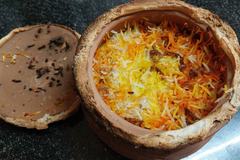 Awadhi / Lucknowi
 Pahari
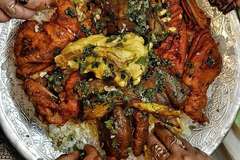 Kashmiri
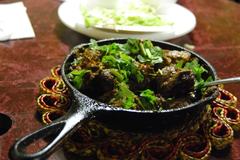 Punjabi
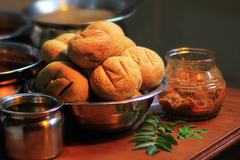 Rajasthani
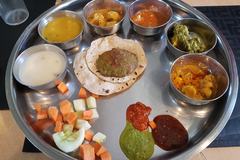 Gujarati
 Maharashtrian
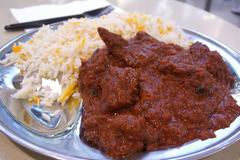 Goan
Goan
 Karnataka
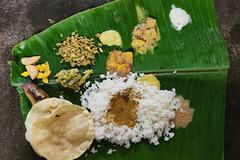 Kerala
 Tamil Nadu
 Andhra
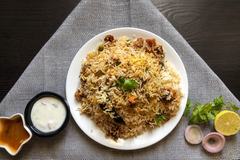 Hyderabadi
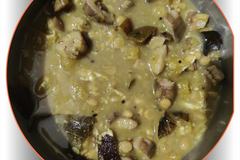 Odia
Odia
 Bihari
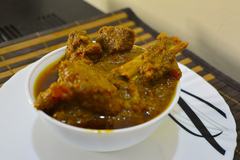 Bengali
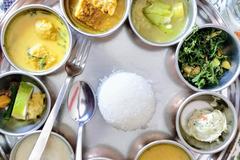 Northeast Indian
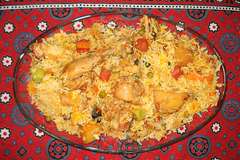 Sindhi
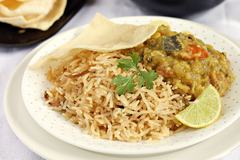 Parsi
Parsi
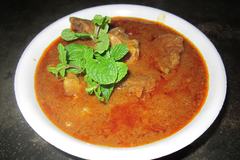 Anglo-Indian
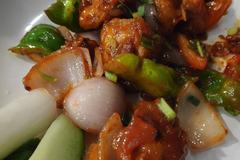 Indo-Chinese